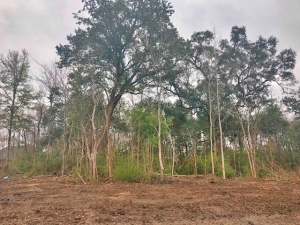
Terrytown Will Now Have a Revitalization Program
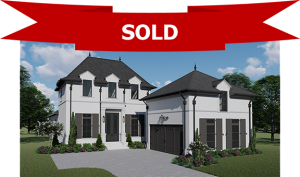
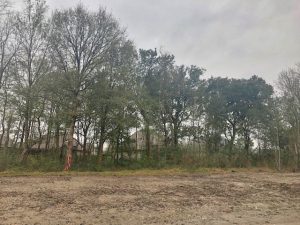
Terrytown located in Jefferson Parish will now have a revitalization program thanks to the Jefferson Parish Economic Development Commission, in coordination with Jefferson Parish President Cynthia Lee Sheng, Councilman-at-Large Ricky Templet and other development partners. In fact, the project already has its first model home currently under construction.

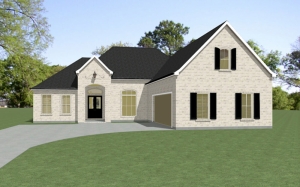
The home, located at 522 Farmington Place, will be built by local Hyman Bartolo Contractors and is set to be completed by the end of the year. This is the first home being built under the Jefferson Parish Neighborhood Revitalization Model Home Pilot Program in Terrytown. It will be designed following the same architectural style found in the neighborhood that was developed by Paul Kapelow in the late 50’s and early 60’s.

“This model home will have a positive economic impact on our community,” said JEDCO President and CEO Jerry Bologna.

Tulane School of Architecture Albert & Tina Small Center for Collaborative Design has developed guidelines to follow which are patterned after mid-century modern. They took their inspiration from historical and existing architectural styles found throughout Terrytown.

The overall project will be overseen by NOEL and will be guided by the Terrytown model home pilot program. The New Orleans Metropolitan Association of Realtors, the Home Builders Association of Greater New Orleans, New Orleans Educational League for the Construction Industry and the Jefferson Parish Finance Authority will also participate in the project.

The Jefferson Parish Neighborhood Revitalization Model Home Pilot Program’s purpose is to ” provide a suite of tools, resources and recommendations that will improve existing housing stock, encourage the development of new desirable housing units and improve the neighborhood amenities and infrastructure in Terrytown. The plan was created to stimulate investment in housing stock that complements surrounding architectural styles while featuring contemporary interior and exterior designs in demand by today’s homebuyers.”

“When a prospective business considers a community, they make decisions based on a number of factors, including quality of life, education and housing. Improving our housing stock and addressing and providing a variety of housing options will allow our community to remain economically competitive and attractive. Our innovative approach to neighborhood advancement, along with our dynamic partnerships, are some of the many reasons why Jefferson Parish continues to be a destination for business,” said Bologna.

Click Here For the Source of the Information.
Westwego Was the First Cajun Settlement in the Area

When one thinks of New Orleans, they immediately think Cajun but surprisingly the first Cajun settlement was west of the metropolis in Westwego. Westwego is the location where greater New Orleans more or less skirts the Acadian Triangle which consists of “22 contiguous parishes where most Cajuns live.” Cajuns have lived and thrived in this area for close to two hundred years.
Cajuns are a French-Canadian ethnic group that settled in Louisiana after they were kicked out of the Acadie region in Novia Scotia by the English during the French and Indian War. Spanish leaders began to offer Acadiens land grants in the area west of New Orleans. The group was formed and would become known as the Côte de Acadiens.  Later the group would be reformed as Cajuns which is the term Louisianians use interchangeably Acadians.

The Company Canal (also known as the Cajon Pipeline) was the way coastal resources such as oysters, crabs, shrimp, fish and game as well as timber, moss, shells, and other raw materials reached inland. Later, railroads also became a vehicle for coastal goods. The New Orleans, Mobile and Texas Railroad connected north Texas with Mobile through tracks running on the banks of New Orleans and train ferries crossing the Mississippi River. The railroad company deemed the passageway “West-We-Go and this is where the community of Westwego got its name.

Westwego would become greater New Orleans’ cannery row because of its canals, railroads, and coastal-savvy denizens. Sala Avenue and 2nd Street soon became the hub of the seafood processing industry. Durac Terrebonne’s Fishermen’s Exchange was housed here where there was a crab meat processor, a shrimp factory, two ice manufacturers, a cold storage unit, and a seafood retailer.

Residents are proud of their French heritage. In fact, according to the 2000 Census, the majority of Westwego residents claimed “French” when filling out the Census. Cajun was how residents responded to the 2013-2017 American Community Survey as their ancestry. Cajun French is very much a part of Westwego and will always be the area’s original connection to the Côte de Acadiens.

Click Here For the Source of the Information.

South Louisiana A Great Place For Trophy Trout

Although south Louisiana has seen some hits from Mother Nature, there are still great trout to be caught in the state’s many waterways. Some might argue that there are no longer big trout to be caught in southern Louisiana’s waters. For decades anglers from all over come to the region because Louisiana is located at the end of the Mississippi River making it a perfect spot for trout fishing.
Speckled trout are known to be a premier fish in the area. The speckled trout goes by many names including spotted sea trout, specks, yellow-mouths, and paper-mouths. The average size of the fish is between 14 – 18″ and weighs between 1 – 3 lbs.

Todd Masson, a writer for Louisiana Sports Man, went on a trouting expedition with Caption Ty Hibbs. Caption Hibbs has been boating and fishing since he was a teenager in Louisiana’s waters. The trip was set to go sight-fishing for redfish in northern Plaquemines Parish’s marshes however they took a detour to a nearby pond to try and catch some speckled trout.

The pair used topwater baits in the pond to catch the trout which Masson explains is his favorite fishing technique. They decided to use this technique because a cool front had come through the area which lowered the water temperatures. Usually when this happens fish tend to go upward to the surface to find food.

Luckily this worked, and within several cast, they caught a speckled trout. The trip ended with taking a photograph of the 26 inches, 6-pound hard-core speckled trout.

Click Here For the Source of the Information.

Customers Prefer These Five Green Products and Systems

According to the 2020 Green Single Family and Multifamily Homes SmartMarket Brief consumers want products and systems that will “directly impact their utility bills or indoor environmental quality.”

The study shows that over half of builders and remodelers (57%) rank green products and systems related to energy efficiency as the primary request from homeowners. In fact, in the same data, it was reported that 84% of homeowners rank it in their top three. Among others in the top three were IEQ (impacting indoor environmental quality) products and systems as well as material and resource-conserving products and systems.

For those builders who identify themselves as green builders (meaning more than 50% of their project is green), many are using green products and systems on more than 50% of their projects. As for energy high-performance practice builders used LED lighting 91%, insulation 82%, windows 75%, blower door testing 45%, Balanced Ventilation (ERV/HRV) 45% and HERS score 51%. For IEQ (impacting indoor environmental quality) builders used direct outdoor ventilation of fans/exhausts 81%, Low-VOC materials 67%, increased moisture control 50% and increased ventilation 45%. When it comes to water 81% used high-efficiency plumbing fixtures, 72% used efficient plumbing techniques and 41% used drought-tolerant landscaping. When it came to materials and renewables, 84% used durable materials, 78% minimized construction waste, 59% used prefabricated components, 16% used solar energy and 13% used geothermal.

The 2020 Green Single Family and Multifamily Homes SmartMarket Brief consist of surveys done by the National Home Builders Association. Four short surveys on market activity, marketing, drivers and obstacles, products and practices lasting about 5-8 minutes each are given to general contractors, home builders, remodelers and developers from
both single and multifamily markets within the United States.

For home building professionals it is important to understand both the overall market and the green-building landscape to better provide consumers what they want in a new build or remodel. Consumers demand is the top driver and customers are wanting green products and systems for their homes.

Click Here For the Source of the Information.

The West Bank A Big Part Of New Orleans’ Landscaping

Tulane senior professor and geographer Richard Campanella has written ten acclaimed books on New Orleans’ historical geography. His most recent book, “The West Bank of Greater New Orleans: A Historical Geography”, looks at the story of New Orleans’ West Bank.

S. Stewart Farnet, an architect and preservationist who passed in 2018, was the inspiration to the study of the West Bank. Farnet, who graduated from Tulane in 1955, was a descendant of two very prominent and important families who were part of the development of the West Bank.

Campanella, who last year received the Louisiana Writer Award from the State Library of Louisiana, began his study three years ago. He based his study on the many conversations he had with the late Farnet.

“One of the most fascinating things I learned about the West Bank was just how much I had to unlearn from my prior understandings of Greater New Orleans, because those trends, drawn mostly from the experience of the East Bank, often did not apply to the West Bank,” Campanella said.

In his book on the West Bank, Campanella examines the historical geography. He surveys and explains how the landscaped and cityscape of the West Bank was developed. He discusses the formation of the terrain, environment, land use, jurisdictions, waterways, industries, infrastructure, neighborhoods and settlement patterns, past and present. The book is a timeline that helps to tell the West Bank’s geographical story. Campanella tells the story through the use of maps, aerial images, photographic montages and a detailed historical timeline.

The West Bank is actually a sub-region with tons of history and stands out on its own from the East Bank. The region has a “diversified industrial sector as a riverine, mercantilist and agricultural economy,” Campanella explains. “It served a jumping-off point to the Western frontier and a Cannery Row for the Gulf of Mexico to the south.”

“How this mixed-use area was sculpted by the Mississippi then populated, developed, and governed over more than three centuries is the subject of this delightfully eye-opening study,” Powell wrote. “Of all the fine books Campanella has produced ― and they are starting to mount up ― this one may rank among his most revelatory.”

Click Here For the Source of the Information.