It is our goal at The Parks at Plaquemines to keep our buyers informed about the latest information from the local, state-level, and national real estate industry. We post content to our blog that we hope that you as our custom home buyer will find helpful. Look here for information about financing your new home, building restrictions for new homes, and real estate legislation that will impact you as you are looking to buy or build a new home in the Greater New Orleans area.

Construction and Development for Commercial and Retail Shops in New Orleans East

Residents of the West Bank may soon have something new to do on a summer afternoon in New Orleans, Louisiana, if Tipitina’s owner Roland von Kurnatowski and his business partner, Eric George have anything to say about it.  They are currently in negotiations to develop and construct a new water park and outdoor music venue on the 4.5-acre plot of land on Lake Pontchartrain in eastern New Orleans.  This acreage is where the Bally’s Riverboat Casino stood for many years before Hurricane Katrina forced it to close and move out of the state. The venue will not only sport the water park and outdoor amphitheater – designed to seat a 5,000 capacity – but there will also be construction and development for commercial and retail shops and venues on the west side of the proposed site.  At the south end of the lakefront development, there could be a two-story building with room for a community market downstairs and a restaurant on the second floor.

new-water-park-on-lakefront

The construction project has been the brainchild of Studio Network-Lakefront LLC, which is the company created by Tipitina’s owner and Dr. Eric George, a prominent New Orleans orthopedic surgeon.  These men have a vested interest in the culture and heritage of New Orleans because they also purchased the Orpheum Theater last year and immediately began renovations on the structure to bring it back to its former glory.  They pledged to put a total of $13 million into that project.  Since construction on this building in New Orleans is moving along as scheduled, the Louisiana Philharmonic Orchestra has agreed to start performing there when the theater is completed later in the year.  So, complete renovations and seemingly impossible construction projects seems to be this pair’s forte, and New Orleans East’s lakeshore are will benefit from their expertise.

The history behind this 4.5-acre plot of lakefront land is that nothing was done to restore it once Hurricane Katrina destroyed it.  With the “separation of powers,” in 2010 which created an actual Levee Authority which would oversee all properties along the levees, the land was assessed as hopeless because of the cost of the taxes and the deterioration of the property.  Once this was realized, this and other properties were offered to the public for bids.  The only bid on this property was from Studio Network-Lakefront, LLC.  Their proposed project would be named Tipitina’s Festival Park and would include the following:

  • An outdoor amphitheater with a 5,000 capacity
  • A lazy river and splash park
  • Water slides and zip lines
  • A two-story, covered boardwalk with shops
  • The conversion of the old riverboat terminal into an open-air market

Development and construction in New Orleans is always welcome especially after Hurricane Katrina, but it is enlightening and encouraging to have such an innovative concept introduced by Tipitina’s owner and his business partner who seem to have a soul-reaching interest in rebuilding and renovating New Orleans East on the lakefront of Lake Pontchartrain.

Click Here for the Source of the Information.

Thriving West Bank Community for New Home Construction

One of the many perks of living on the “high ground” of the Mississippi River is that the space to build new construction homes or business is very condensed and highly valued.  This is particularly seen by the inexhaustible french-creole-cottageamount of homes that have been built in the Greater New Orleans area.  Through a rich cultural history, New Orleans has seen its streetscapes and new home construction defined by German, Spanish, and French influences.  In a reflection of this construction development, neighborhoods in this productive city in Southeast Louisiana were also developed based on race, culture, income, and status.  The term French Creole architecture stems directly from the Creoles who established, occupied, and thrived in their own sector of the city of New Orleans on the East Bank of the Mississippi.

New Home Community

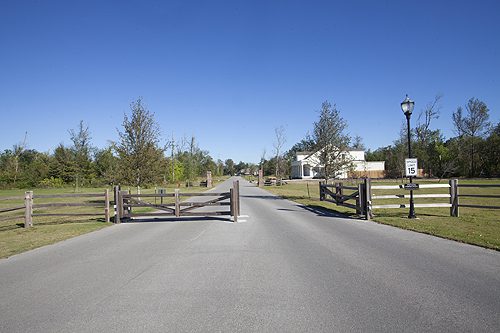
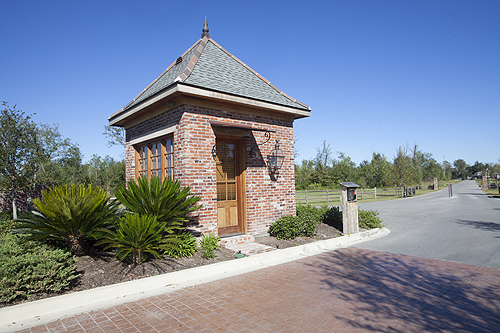
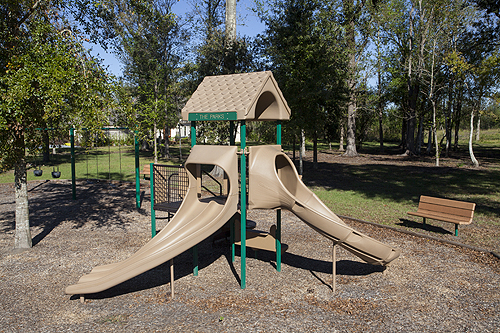
Not to be outdone, the West Bank of New Orleans also established an unprecedented and condensed development of new home construction as well as commercial and industrial construction in and around cities such as Terrytown, Gretna, Harvey, Marrero, and Westwego.  All of these productive cities seem to “hug” the crescent in the Mississippi Parkside-20River because the ground right next to the river is considered high ground.  This is the same reason that the French Quarter has never flooded after levees were installed on the Mississippi River – it is the highest ground in the city.  Another new home construction community on the West Bank of New Orleans, just outside of Gretna, Terrytown, and Algiers that has never flooded is the Parks of Plaquemines.  This master planned development features new, custom home construction with community amenities such as private streets, gated entrance, a park & trail system, a swimming pool, tennis court, and tot lot / playground.

Lower Cost to Live Close to New Orleans

In fact, this subdivision is a thriving west bank community for new home construction, and it only gets better.  New Orleans is known for having a high cost of livability.  In other words, being able to afford to buy a new home in New Orleans is challenging because of the high cost of land taxes, utility and sewer rents, and the cost of living in general.  The good news about the neighborhood Parks of Plaquemines is that this community is located a mere 10.2 miles from the Central Business District (CBD) in New Orleans, LA. This means that if you are working in a corporate location IMG_8308in downtown New Orleans, you only have to commute approximately 20 total miles to and from work while saving a huge amount of money on your cost of living expenses.

Lower to No Flood Risk

The subdivision itself just happens to sit on high ground near the river as well.  And, don’t just take our word for it,  once the new FEMA flood maps are adopted, the entire neighborhood will be taken completely out of the flood zone.  Plus, as mentioned earlier, the Parks of Plaquemines has never flooded, not even during Hurricane Katrina.  In addition to its amazing location and flood zone benefits, our community also is located in a parish which has a school district which was just ranked 8th highest in the entire state of Louisiana.  The parish achieved a enough points to move it from a B grade last year to an A grade this year.  The school’s 2014 annual district performance score was 104.8 overall out of 150 compared to a 95 last year.

So, if you are interested in owning your own little piece of high ground along the Mississippi River in New Orleans, Louisiana, you should definitely check out the Parks of Plaquemines, just minutes from all the city has to offer without the cost, flood risk, or expense of private education instead of utilizing the public school system for your kids. To take a tour of the new home construction continually being done at our subdivision, Visit the Parks of Plaquemines Today!  Call 504-364-2350 or E-mail [email protected].

The Perks of Living NEAR New Orleans, Louisiana

When a person thinks of living in or moving to New Orleans, Louisiana, there are many positive ideas and feelings that invoked with that thought.  The most popular draws to this city in the crescent of the Mississippi River are that the city has amazing cuisine, culture, climate (well, for 8 months of the year), and fine arts – music, arts, theater, street performers, etc.  Images turn to the French and Spanish influenced new-orleans-architecture-1architecture of the French Quarter and the simplistic design of cottages and shotgun houses of the Marigny.  There are well-known segments of the city – Uptown, Lakeview, the 9th Ward, and the long glorified Garden District made famous by Anne Rice and her vampires.  And speaking of vampires, visitors and residents alike must remember that the City of New Orleans is about to celebrate its 300th birthday, so it is steeped in history, memories, and sometimes even ghosts.  All that the city has to offer includes not only the partying and debauchery of Bourbon Street or the elegance and wealth of the Garden District, it also is a thriving metropolis with the opportunity to work with some of the nation’s top corporations.

New Orleans is also known for being one of the most entrepreneurial cities in the United States.  In New Orleans, “we celebrate everything,” and this is emphasized in the fact that there are at least 2 conventions / seminars held in the city to encourage and finance start-up small businesses or inventions.  Another less savory thought that comes to mind when someone thinks of moving to and living in New Orleans is the crime and the poverty of the city.  Just like any larger “central city” in America, with a large city comes more people with more problems.  Murders are down, but petty crime and property crime is up – try to figure that one out!

What IF…what if you could “have your cake and eat it too?”  What if there was a place that you could live that had a lower cost of living, lower property taxes, lower city taxes, and lower utility bills.  What if you could design a new custom home, framed out in any architectural style that you wanted, built to your exact specifications on a lot of your choosing?  What if you could live in a city that was semi-private, had a strong police presence, a low crime rate, that was only 10.2 miles from the Central Business District of New Orleans. Would this be an idea that would appeal to you?

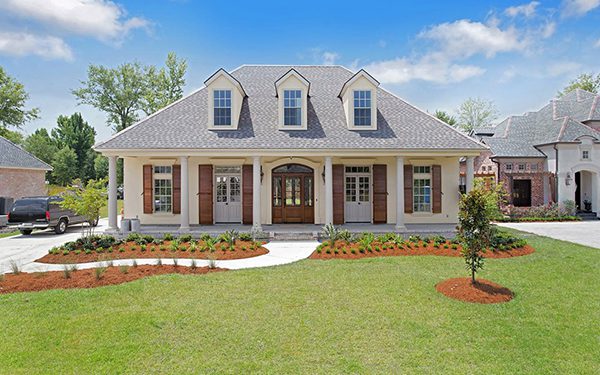
Yes? Great!  Welcome to The Parks of Plaquemines, a gated, master planned community just 10.2 miles from the Central Business District of New Orleans.  Our new home subdivision has a country feel with a city flavor.  New homes being designed and built in this neighborhood have many different types of architecturally designs.  While all floorplans are subject to approval by our Architectural Committee, local builders are used to the building homes that appeal to an aesthetic New Orleans-styled home.  Our community has many Amenities including (but not limited to!) a swimming pool and tennis courts.  Because The Parks is located in Plaquemines Parish, you are not subject to the City of New Orleans and Orleans Parish tax rates.  Also, the Plaquemines Parish School District was just ranked 8th in the entire state of Louisiana, receiving an A performance score for the entire district.  This community offers a safe place to live, at a lower cost of living, with an incredible school district – what more could you want?

I know what you’re thinking…it’s New Orleans; it’s going to flood again from a massive hurricane.  Well, we are happy to report that The Parks of Plaquemines existed BEFORE Hurricane Katrina.  It did NOT flood during Katrina, and it has never flooded.  In fact, the subdivision was strategically developed on “high ground” that was just certified by the new FEMA flood maps to need minimal flood insurance in our community.  Currently, we are featuring Traditional Lots for Sale as well as the possibility of building a new, custom home of your dreams with one of our qualified builders.  Our subdivision features the best of both worlds – a close proximity to “playing” and working in New Orleans but living in a less expensive, safe community which also offers walking / biking trails within the community.  So, Come and Visit Us to Check Out Our Quickly Growing Community!  Call 504-364-2350 or E-mail [email protected] to Schedule Your Tour.

Pending Contract Forecast Good News for Home Sales

The National Association of Realtors (NAR) maintains a Pending Home Sales Index (PHSI) which keeps tract of approximately 20 representative markets throughout the United States.  The Index monitors signed contracts on existing homes because research has found that Parkside-21keeping tabs on contracts that have been signed usually translate in numbers and statistics to closed home sales approximately 1 to 2 months after the contract is signed.  Using this index, The NAR can predict home selling trends as the real estate industry slowly and steadily recovers from the Recession.  The PHSI has shown that pending home sales have been increasing over the last three months.  The Index showed a .8% increase in November bringing it to 4.1% higher than November, 2013.  This is the largest increase since over 15 months before when there was an over 5% increase in August, 2013.

“The consistent economic growth and steady hiring we’ve seen the second half of this year is giving buyers enough assurance to consider purchasing a home before year’s end,” said Lawrence Yun, NAR chief economist. “With rents now rising at a seven-year high, historically low rates and moderating price growth are likely to entice more buyers to enter the market in upcoming months.”

Another factor that has greatly helped with consumer optimism is the drastic fall in gas prices.  While the durability of this decrease is still very much in question, it has definitely help ease potential home buyers’ monthly expenses, making it possible in some cases to be able to afford the 6% average down payment that is currently required by lenders to get into a home.  However, programs are being implemented by Fannie Mae Parkside-15and Freddie Mac that will back loans with a 3% down payment making it even more affordable for buyers and first-time home buyers to be able to enter the market for the first time in 7 years.

“There’s still misperception out there that a much higher downpayment is needed, while that’s not the reality,” adds Yun.

In the South, the PHSI went up 1.3% to 119.7, which is 5.1% higher than this same time last year.  Even though home sales overall are expected to be “down” (494 million homes sold) by the end of 2014, there is expected to be an increase to home sales in 2015 because of low interest rates, loosening credit requirements, and stabilizing home prices.  In order to regain its footing after the Recession, home prices went up by over 11% in 2013, but they only rose moderately overall in 2014 and are expected to grow at an average rate of 4% – 5% over the next two years, which is the sign of a healthy housing market.  If the pending home sales are any indicator of the health of real estate (which statistically, it is!), then there is every indication that the housing market is continuing to move forward and upward in growth and recovery into 2015.


Click Here for the Source of the Information.

Five Ways to Think About the Rising Interest Rates

For those home buyers who have purchased a home before, navigating through the mortgage approval process once you have found your home for sale is a little bit easier than for someone who has never purchased a home before.  However, figuring out what the real estate market will do and when and how to buy a home at the right time, the right price, with the best interest rate has been a little like spinning the roulette wheel at the casino over the past 4.5 years.  Home buyers and refinancing homeowners have enjoyed phenomenal interest rates since the interest rate for a 30-year fixed mortgage dropped to 3.3% early in 2013.  This also pushed 10 and 15-year mortgages to as low as 2.5%.  Now there is fear because interest rates have risen by over a percentage point in 3 short months.  So, in order to give you all of the information you will need to make the best choice for you and your family in the home buying or refinancing process, below are 5 practical facts about interest rates, where they’re headed over the next year, and how to optimize your experience in today’s real estate market if you have not already had a chance to capitalize on these interest rates.

1. The Fed bond-buying program, especially the buying of mortgage securities, has kept interest rates at 100-year lows over the past 1.5 years.  Because of the stabilizing economy and the federal deficit, “all good things must come to an end.”  In other words, the Fed cannot continue to keep purchasing these bonds.  The buying must stop, and the economy must learn to survive on its own.  So, the 3.3% on a 30-year fixed will most likely be a thing of the past with perhaps, maybe a drop back down to this rate here and there in certain market conditions.  However, you, as a home buyer, must mentally allow yourself to still enjoy the current interest rate.  Right now, the interest rate for a 30-year fixed mortgage is around 4.5%.  Predictions state that it is not expected to rise above 5% at least until the end of 2014.  So, interest rates are still historically low, and they will make a home payment affordable.

2. If you purchased your home even in 2005, you may have enjoyed an interest rate of approximately 5.75%, so refinancing your home and incurring closing costs may not be the right move as interest rates go up.  However, if you are a homeowner who had a home which lost its value in the crash, you should definitely talk to your Realtor as to the current value of your home.  Home values have been on a steady rise, and most markets are reporting home pricing gains each month.  At least 850,000 homes gained back their value because of a stabilizing real estate market in the first quarter of this year.  So, refinancing this type of loan at these interest rates would still be a good idea.

3. Don’t panic just yet that rising interest rates will bring the housing recovery to a screeching halt.  While not ideal for either home buyers or builders, interest rates have to rise in order for the Fed to “stop the bleeding” of the government theoretically “bailing out” the housing industry by buying bonds.  It would take a rise of about 3% to see the housing market negatively impacted by rising interest rates.  Refinances and purchases may slow down slightly as the rate climbs, but once it stabilizes over a period of months, then people interested in buying a new or previously-owned home will have the confidence needed to do so.  At best, home buyers should take advantage of the rates now and go ahead and “take the plunge” to buy a home before rates go back up.

4. If you don’t know anything about financing a home, then you will want to make sure to ask your banker or lender about locking in your interest rate.  Typically, there is no charge to lock in at 45 or 60 days.  Refinancing a home used to take 6 – 12 weeks because of all of the new government regulations on loans, but that time period has been drastically reduced as banks and lenders have grown comfortable with the new system.  If the institution you are using to get your mortgage takes a long time to process loans, you should find out what the charge would be to lock in for a longer period of time – 90 – 120 days.  Have your loan officer crunch the numbers to see if it is in your best interest to pay for a rate lock to save money in interest over the life of the loan.  This is a service they should provide you.

5. Loan packages since the Recession have been greatly simplified because the interest free / pay later type of loans no longer exist.  However, there are still fixed-rate loans and the ARM (Adjustable Rate Mortgage) out there you will need to choose between.  If you have never had an ARM, or if this is the first time you are buying a home, the main thing to think about when it comes to getting the lower interest rate which an ARM offers is how long you are planning to own the home.  If your purchase is temporary because of your job or because you know you will be “upgrading” in a few years, then the shorter time period you plan on owning your home, the better idea it is to get an ARM.  ARM’s typically have a much lower interest rate and only allow an increase of 1% each year, while not letting the rate go higher than a stated high interest rate or “cap.”  Also, if rates go down, then so does your interest rate in some cases.  However, when you reach your “cap,” and you are still in your home at a higher interest rate, that is how you lose money and pay more interest with an ARM.  So, when choosing the loan which is right for you, consider the amount of time you will be staying.  If you plan on staying “forever,” you will want to go with a fixed-rate loan.

Be smart about interest rates, don’t panic; the housing market will still thrive at current market rates for quite some time.


Click Here for the Source of the Information.