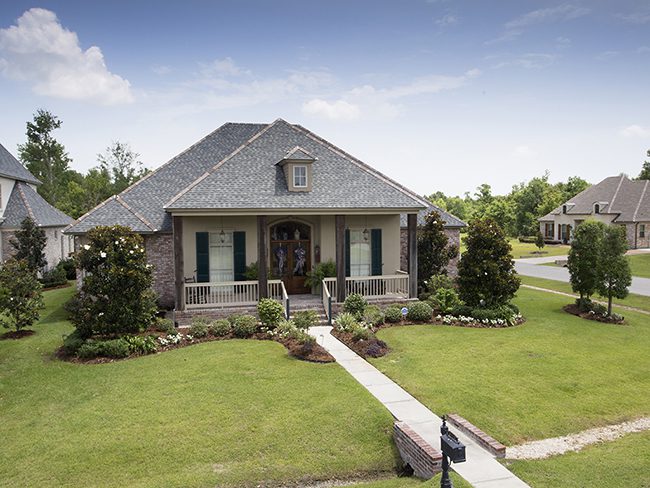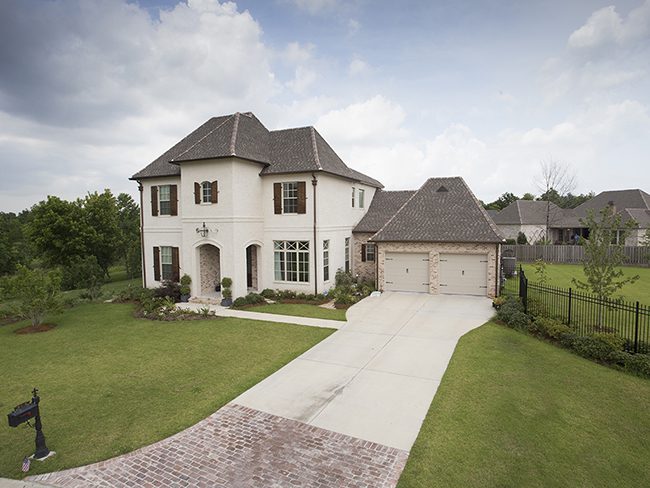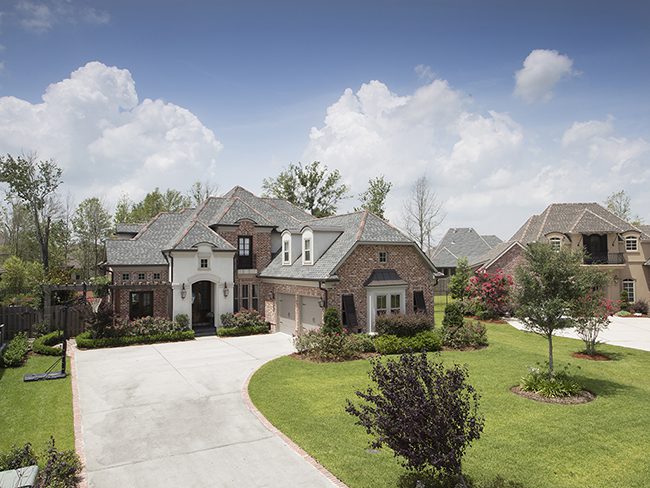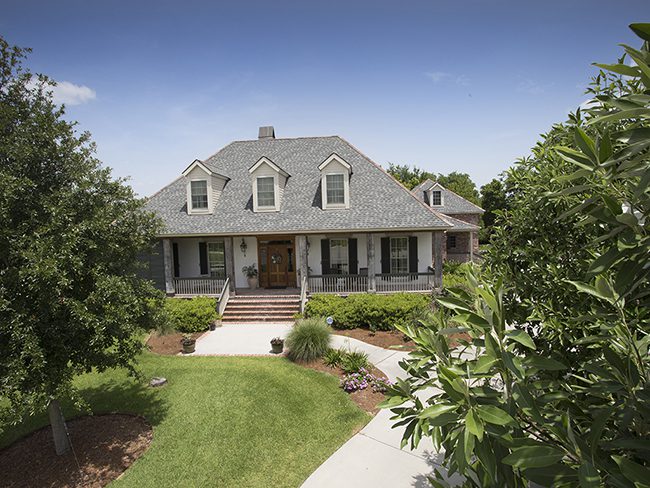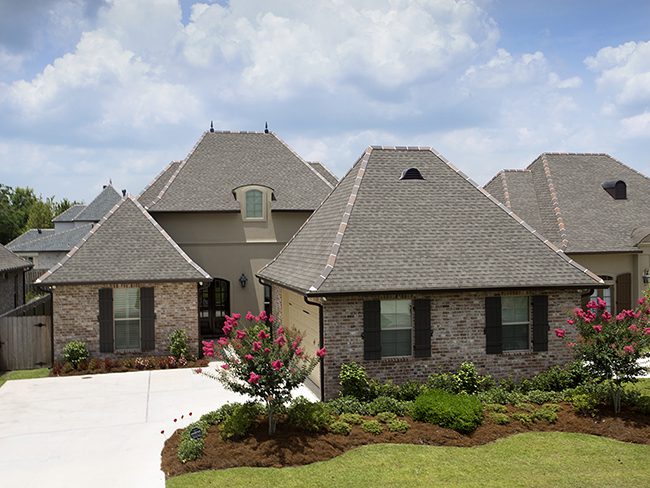
It is our goal at The Parks at Plaquemines to keep our buyers informed about the latest information from the local, state-level, and national real estate industry. We post content to our blog that we hope that you as our custom home buyer will find helpful. Look here for information about financing your new home, building restrictions for new homes, and real estate legislation that will impact you as you are looking to buy or build a new home in the Greater New Orleans area.

Residential Construction Employment Steadily Rising in 2016

As the national employment rate has steadily been dropping because of increases in available jobs nationwide which have also been sporadically been increasing since 2012, jobs in the construction industry have reached a critical level.  For once, this level is critical in a positive way instead of a negative one.  The residential construction employment industry is lacking the manpower of subcontractors and employees to complete new homes being built.

Builders are happily trying to meet the new demand for housing, as there has been a decrease in availability of existing homes for sale.  However, with a backlog of jobs available to be completed for qualified subcontractors,Builders, Developers, and Realtors Working Together in the Greater New Orleans Area builders are caught waiting for weeks, sometimes months to be able to finish homes ready for sale.

The National Association of Home Builders (NAHB) reported that the Bureau of Labor Statistics (BLS) showed an increase in the unemployment rate in March, 2016, because of employment available in the construction industry.  However, the percentage increased because there were more potential employees in the labor pool than ever before because of the availability of these new jobs as well.  It has not turned into an “employer’s market” as of yet, but with the availability of construction jobs, and the turnover of employment in the real estate industry, it may soon do so.

In February alone, 193,000 unfilled jobs in the construction industry were available for those looking for work, which is a record high for after the Recession.  The estimates for March show an addition of 13,400 workers with an increase of 166,000 compared to March, 2015.  All very good news for residential construction.
Click Here for the Source of the Information.

Residential Construction Spending Reflects in Real Estate Sales

Many of the new homes built at The Parks of Plaquemines, located in Belle Chasse and bordered by Timberlane, Terrytown, Algiers, Gretna, and Harvey, are built by either private builders or individual lot buyers who purchase lots in our new home community and qualify as residential construction.  People who buy lots are interested in building a new, custom home in the subdivision because of its location near New Orleans, as well as the lifestyle that2-100 the neighborhood provides.

The lot sales in The Parks of Plaquemines have been on the rise with builders also interested in building new homes for sale on the homesites for sale in our community.  These builders typically will either build a home, contracted for a specific home buyer, or to sell specifically customized homes to potential custom home buyers.  Custom home builds and purchases have been on the rise with the revitalization of the Greater New Orleans area in the past 10 years.

According to the National Association of Home Builders (NAHB), private residential new home construction spending has increased to a rate not seen since November, 2007, which is a benchmark date of many new home and home sales records in Southeast Louisiana. Specifically, money spent on single-family homes has increased 10.6% since 2015 and is up 1.2% compared to numbers calculated in January, 2015.

The good news is that the NAHB is also projecting a rapid increase in this residential spending from now until the end of 2016.  For our New Orleans area subdivision, there is good news from lot and new home sales that have been continuous since the beginning of 2016.  New phases of both our Villas (garden homes) and Traditional Neighborhoods are in the works for this year as well.

Click Here for the Source of the Information.

Creole Architecture Has Deep Roots in New Orleans

When you hear the word Creole you think of Louisiana. There are many different uses and meanings of the word – one which has many unique facets is Creole architecture.  Known for historical buildings and aesthetic cityscapes, New Orleans is a place where you can find this one-of-a-kind architecture.

Creole architecture was derived from adaptation to Louisiana’s climate.  Construction techniques were actually045 copied from the arrival of newcomers to the area in the 1700’s from many different regions of the world, mainly Spanish, German, and French.  The architecture was somewhat modified after the massive fire of 1788 in the French Quarter, and then became defined as first-generation “country Creole” and second-generation “city Creole” architecture.

If you are interested in Creole architecture, here are some distinct features to look for in a home or building when touring New Orleans.

The more unique and hard to find characteristics are those seen on houses and buildings built before the massive fire.  Colonial New Orleans followed the construction methods of their original regions.  When locating a first generation “country Creole,” look for clapboard houses that are made from timber.  The roof will be oversized called a “Norman” roof which is hipped and double-pitched.  The houses will have a large wooden gallery (old French porch) with colonnades (supportive columns) and balustrades (decorative railings) which merges the outdoors with the indoors.  The chimney is located in the middle of the roof and all of the home’s exterior openings have either French doors or shutters.

It will be easier to find the second-generation “city Creole” in the architecture throughout the Crescent City.  You will find the homes have a flat roof or tile roof and brick siding, coated with stucco, arched openings and wrought iron balconies.  The larger houses are common-wall townhouses with a porte cochere that runs into a rear courtyard.  Shotgun houses are also part of second-generation “city Creole”.   These homes are long and narrow and perpendicular to the street.

When you are in New Orleans, take a look at these historical spots:  Madame John’s Legacy at 632 Dumaine St., Ossorno House at 913 Gov. Nicholls St.,  St. Philip, Lafitte’s Blacksmith Shop on Bourhon St., Old Spanish Custom House on Moss St, Pitot House on Moss St.,  Lombard House in Bywater,  and the Old Ursuline Covent on Charles St.  You will find hundreds of examples in the French Quarter and many second-generation Creole townhouses along Royal St. as well.

Click Here for the Source of the Information.

Neighborhoods in New Orleans with Homeowners Associations

Nobody wants an unsightly home with an overgrown yard, piles of junk, or a home with chipping or peeling paint next to their home.  This might be one of the main reasons why we see a trend of new homes being built in communities with associations.  The Census Bureau’s Survey of Construction (SOC) states that out of the homes built in 2014, 58% were built within a community or home owner’s association.  Where do the neighborhoods in New Orleans fit in that 58%?  The West Central Division that includes Louisiana was at 63.4%.078

While some may have a negative point of view on community associations, there are a lot of benefits that come from having an HOA in a new home community.

Most importantly is community appearance.  When searching for a new home, homebuyers want to see a welcoming, kept subdivision.  No one wants to purchase a home surrounded by multiple boats and RV’s, falling down fences or tackily painted houses.  HOA boards define rules for the neighborhood such as how many cars or what types of cars can be parked on your property, if you can have a basketball goal in your driveway, or even things such as decorations in your yard.  The HOA also has the authority to approve paint colors, fence designs, landscape designs and landscape features.  The HOA will notify residents if their yard is looking unkempt or their home needs exterior repairs. These rules and regulations maintain a well-kept and appropriate appearance.

Low maintenance is appealing to prospective home buyers. HOA’s can reduce the subdivision workload to keep a 041community maintained by keeping up the common areas.  Some HOA’s include services such as trash pickup or lawn care in their monthly or annual dues.

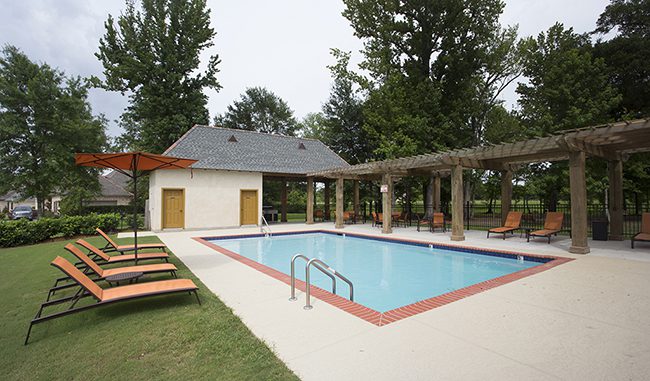
Neighborhood amenities are a great selling point for a new construction neighborhood and are also alluring for a new home owner.   HOA’s can offer many different amenities depending on HOA neighborhood fees.  Some examples of these are swimming pools, tennis courts, walking trials, playgrounds, community center, and sports areas designated for residents within the development.

The last great benefit for residents is the Association Management.  Rather than confronting a neighbor which, more than likely, will turn into a dispute, you can have the Association Management step in and mediate.

Remember when looking to buy a new home always research association fees and regulations to make sure you are comfortable with the neighborhood’s HOA.  Developments with HOA’s will always benefit from these organizations.

Click Here and Here for the Sources of the Information.

Home Buyers Widen Search for New Homes in the Suburbs

New Orleans’ home buyers are widening their search for new homes to purchase into markets outside of the city limits. Home prices increased in the city 14 percent last year making it the highest spike in 50 years according to the New Orleans Metropolitan Association of Realtors. Prices across New Orleans metropolitan area increased an average of 5.3 percent but outside the city limits potential home buyers can still purchase an affordable new home.

If you are in the market for a new home, here is a list of the areas in and around New Orleans with their current pricing averages.

In New Orleans the highest average prices were seen Uptown in zip code 70115.  The average price was $633,257 at042 $274 per square foot making this an 18% increase from 2014.  The French Quarter and Treme consisting of the 70116 zip code were also on the high end with a 44% increase in 2015.   The average house price was $589,774 at $302 per square foot and the condo prices ranged from $400 per square foot to $550.  Those who are looking for New Orleans’ charm and history and have a larger budget should keep these areas in mind.

If you do have a slightly moderate budget, there are still areas in the city you can go.  Zip code 70113 which includes the areas of Central City and the section of the Central Business District around Loyola Ave. saw an average price of $391,836 at $193 per square foot.  This seems to also be a hot market because it had a 60% price gain last year.  Our last zip code, 70117, includes Bywater, Marigny, St. Roch and the Lower 9th Ward.  These neighborhoods saw an 18% jump last year but are still affordable at an average sold price of $271,226 or $173 per square foot.

For those home buyers who are on a tighter budget and do not mind adventuring out to the suburbs Jefferson Parish and St. Tammany Parish are two great areas to look.  The highest area of interest can be found in St. Tammany Parish, zip code 70452, that include East St. Tammany and north of Slidell around Pearl River.  There was a 29% 052increase last year, making the average home price $180,997at an average $99 per square foot.  Our next area that has a slightly less average price of $165,761 or $81 per square foot is zip code 70056 West Bank’s Terrytown and Timberlane in Jefferson Parish.

For those home buyers who have a budget below $160,000, there are still many options.  The west side of Slidell in St. Tammany Parish, zip code 70460, had an average price of $154,984 with an average $81 per square foot.  Two zip codes in Jefferson Parish both had an average price of $152,423 or $73 per square foot which were 70058, Harvey neighborhood, and 70094 which includes Westwego, Avondale and Waggaman neighborhoods.  The most budget friendly neighborhoods were found in zip code 70062 and include Kenner along the river and around Louis Armstrong Airport.  The average price sold in these areas was $122,459 ($102 per square foot).

Developers are building new homes fostering potential new growth all around.  Ochsner Medical Center on Jefferson Highway is slated to have a development similar to Magazine Street.  Broadmoor, Lakeview and Gentilly have seen a huge spike in new construction, and Old Jefferson and Jefferson Parish are in demand with their walkable proximity to the Riverbend area and Tulane and Loyola Universities.

Click Here and Here for the Sources of the Information.