Even though Hurricane Katrina only devastated the Gulf Coast and the Greater New Orleans area, the whole world felt her effect. It has been ten years since the horrendous storm blasted through the Gulf Coast and the lessons learned have become the model for cities around the world as they plan and prepare for severe weather and rising sea levels. In essence that one storm became the catalyst for new changes in urban design and development around the world.
No one was prepared for the lives lost and communities lost by Katrina. The Urban Land Institute (ULI) realized that this was a wake-up call for all communities in the area of buildings’ resilience to storms. Buildings must be built with every detail looked at when facing the challenge of a major storm. Not only did New Orleans need to have many buildings rebuilt, but they also needed to be built better than before. Part of this process was not only to focus on the buildings themselves but the land and environment around the community. This was done by restoring marshland and wetlands that aid in absorbing floodwaters, building affordable houses with green technology, and using other means of building that do not solely depend on oil and gas.
According to Sarene Marshall, executive director for ULI’s Center for Sustainability, “The result is a city that is more environmentally sustainable, socially cohesive, and economically prosperous, and is as a result attracting new residents, businesses and investors.”
ULI studied other communities around the world who have also been proactive in their storm protection. These cities have focused on resilience and molding their infrastructures to climate change. Small coastal towns to larger tourist oceanfront resorts have all been affected by the climate change which includes rising sea levels, extreme heat, drought and stronger storm activity. Marshall explained, “As the resilience movement has gained momentum, we are seeing innovative approaches to the planning, design, development, financing, and insuring of real estate.”
The Urban Land Institute (ULI) reported that cities around the world are building for resilience which is not only protecting from bad weather but also improving local and economic growth and quality of life. Resilient design strategies enable a stronger defense against extreme weather which makes communities healthier and more desirable places to live. How are communities doing this? They are taking a holistic approach. Cities are building developments that are walkable and mixed-use which encourage social interactions among neighbors.
The public and private sectors are also building community amenities such as parks, trails, and fitness centers which are also being used for neighbors to connect socially and to be used as emergency escape routes during a storm. Homes in these developments are not only able to withstand extreme weather but also reduce energy and water use which can cut utility cost.
ULI’s Marshall backs up this theory stating, “Being resilient means focusing on adaptation and flexibility of space, so that building uses can change over time to 1) meet the new needs and preferences of residents, and 2) be better equipped to withstand environmental and economic stresses.”
The design of a community can prepare it for severe weather. Not every community should be designed the same. There are a couple of factors to consider such as the types of risks faced and the scale of action. An example of this is considering strategies and risks for someone who is building in a flood zone. These could include raising electrical equipment above the first floor and using water resistant materials in lower levels of the home. ULI has a publication called “A Guide for Assessing Climate Change Risk” which will assist in choosing the correct strategies and actions to take when dealing with disasters. Basically it comes down to understanding the risks and tailoring a strategy for a specific community.
Thankfully ULI has been there for New Orleans during the rebuild after Katrina. ULI has provided guidance and assistance to New Orleans’ development industry through their “Resilience Strategies for Communities at Risk” where the relationship between built and human systems is considered when building housing in the Greater New Orleans area developments.
Click Here for the Source of the Information.

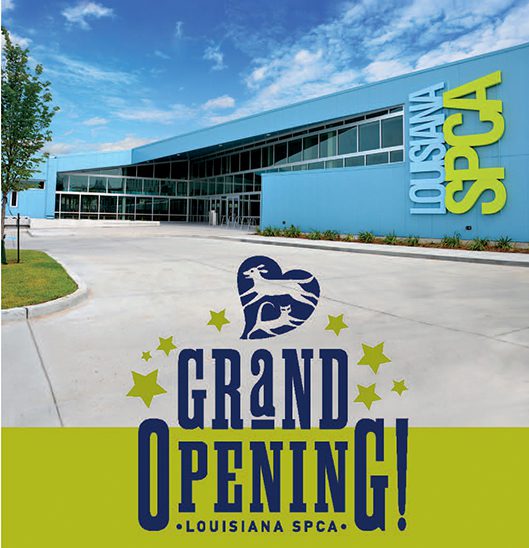 Dorsett Campus was built to replace the old building that was destroyed by Hurricane Katrina. The 40,000 square foot Adoption Resource Center and Clinic is location at 1700 Mardi Gras Blvd. in Algiers on the west bank in Jefferson Parish. The newly built facility will house a permanent public veterinary clinic, education spaces and administrative offices. Twenty one thousand six hundred square feet, in the existing phase one, houses the Animal Rescue and Care Center where animal control services, animal intake and lost and found is located.
 this was a wake-up call for all communities in the area of buildings’ resilience to storms. Buildings must be built with every detail looked at when facing the challenge of a major storm. Not only did New Orleans need to have many buildings rebuilt, but they also needed to be built better than before. Part of this process was not only to focus on the buildings themselves but the land and environment around the community. This was done by restoring marshland and wetlands that aid in absorbing floodwaters, building affordable houses with green technology, and using other means of building that do not solely depend on oil and gas.
 tourist oceanfront resorts have all been affected by the climate change which includes rising sea levels, extreme heat, drought and stronger storm activity. Marshall explained, “As the resilience movement has gained momentum, we are seeing innovative approaches to the planning, design, development, financing, and insuring of real estate.”
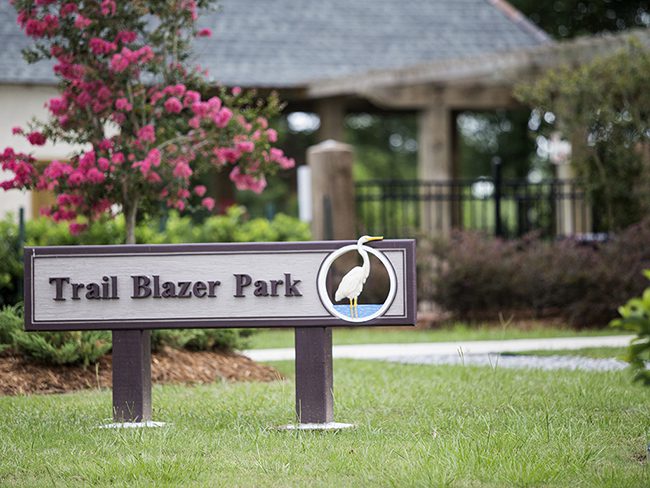 neighborhoods seeing some sort of increase. In general, 40 of the 72 neighborhoods have already recovered 90% of the population pre-Katrina and 16 neighborhoods have actually exceeded their pre-Katrina population.
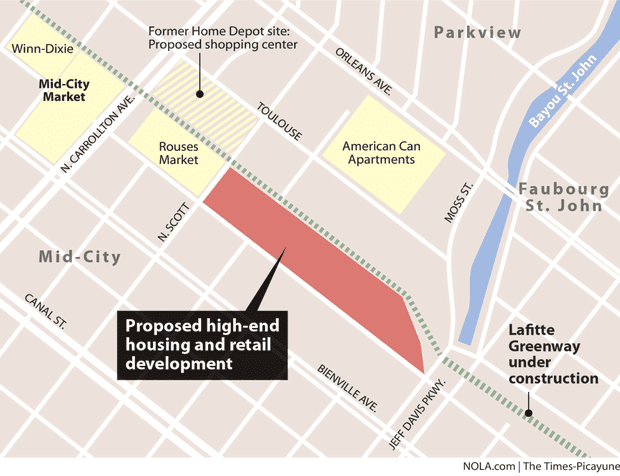 property. Because of its proximity to the new University Medical Center and the Veteran Affairs hospital, housing and retail is being planned as a TND (Traditional Neighborhood Development) to include housing and retail in walking distance within this master-planned community for potential employees of these two medical facilities.