
It is our goal at The Parks at Plaquemines to keep our buyers informed about the latest information from the local, state-level, and national real estate industry. We post content to our blog that we hope that you as our custom home buyer will find helpful. Look here for information about financing your new home, building restrictions for new homes, and real estate legislation that will impact you as you are looking to buy or build a new home in the Greater New Orleans area.

What You Shouldn’t Do After Applying for a Mortgage
Applying for a mortgage is a big part of purchasing a new home. This can be an exciting yet daunting task. Here are a few things you shouldn’t do once you have applied for a mortgage.

Speak to your banker or lender before depositing cash into your bank account.  You do not want to deposit a big chunk of cash into your account all of the sudden. During the mortgage process, lenders need to be able to track where your money is coming from and cash is not easy to track. You can deposit cash during your mortgage process but you will need to discuss how to document your transactions with your lender.

Put big purchases on hold until after the application process. Purchasing new furniture or a new car is a big obligation and will bring monthly payments. Lenders take in all monthly expenses when qualifying you for a loan. If new obligations are created then you will need to be reviewed again. A higher debt-to-income ratio will have to be adjusted. Lenders will tell you that higher ratios equal riskier loans.

Hold off on any co-signing for anyone on their loan. Co-signing is just like obligating yourself to someone else’s loan. These obligations will also make you have a higher ratio. Although you are just co-signing, a lender looks at this as another expense you are responsible for.

Do not change bank accounts. One of the steps on a mortgage application is to list your bank accounts. Lenders need to be able to see where your money comes from and where it goes. If you were to change bank accounts during the process, this can hinder a lender from sourcing and tracking your assets. If you have no other option but to change bank accounts, speak to your lender.

Now is not the time to apply for a new credit card. Whenever a financial organization runs your credit report, your FICO® sore is affected. The higher your credit score the better interest rate a lender can offer you. Lower credit scores will not only determine your interest rate but can also hinder you from being approved for a mortgage.

Keep your current accounts open. There is a misconception that less is best when it comes to open credit accounts. This is not true, in fact, it helps to have a long list and depth of credit history. Closing a credit account can actually create a negative impact on your score.

Remember to keep an open line of communication with your lender throughout your mortgage application process. If you have a change in income, job or have to move things around you should share all those things with your lender. The best plan is to fully disclose and discuss your intentions with your loan officer before you do anything financial in nature.

Click Here For the Source of the Information.

5 Small Changes to Save Money on Your Home

Everyone would love to save money where they can. Your home is not only one of your most valuable assets but an area where you can save a good bit of money. Here are five simple maintenance tips that can help you save money down the road.

Seal leaky doors and windows

Windows and doors that let in hot or cold air can be a nightmare. Not only is your house drafty and uncomfortable, the heating and cooling bills are also high. This is one area a homeowner can cut down on the cost of monthly utility bills. A homeowner needs to make sure their windows and doors shut properly and seal. The first step is to make sure all the latches work properly. Another way to make sure the seal is working is to use weatherproofing stips. Change out singled-paned windows for double-paned windows which are much more energy-efficient.

Clean the gutters

Clogged gutters can damage the outside and inside of your home. The purpose of the gutters is to make sure water is pushed away from your house. A big problem with clogged gutters is the stagnant trapped moisture that can cause your roof to rot. The water that should be lead away by the gutters can also seep into your home’s foundation or basement. Insects and animals also can be attracted to clogged gutters. Schedule a time to clean your gutters so they won’t get clogged.

Replace rotted trim

Trim is a nice upgrade and gives a home a custom look, but it also serves an important purpose. Trim along the roofline, doors and windows keeps water from seeping into the corners of your house. Since the trim is constructed out of wood it will rot. Rotted trim is a great home for insects and small pests and if left untreated the rot can spread to the house framing. Inspect your home’s trim every so often to make sure it is not rotted in some areas. Replace the rotted areas of trim to avoid any disasters.

Change furnace filters

Dirty filters in your HVAC systems can cause several problems. Air needs to be able to flow easily through clean filters. Dirty filters cause your unit to work harder which increases your utility bill. Not only will a dirty filter make the unit work harder, but it can also damage the unit. Ice can form on the coils that will eventually cause mold growth. If this occurs the whole unit will have to be replaced. It is a good idea to replace your air filters every few months.

Upgrade according to your homeowner’s policy

Many homeowners insurance will allow a discount for certain upgraded items on a home. Some examples would be a monitored home security system, or Simplisafe (types of sensors) that are temperature sensors for extreme weather changes. Premiums can also be lowered by replacing your roof or adding new plumbing or wiring. A good idea would be to read the fine print on your policy or simply call your insurance agent before you make an improvement or upgrade to see if it would count for a discount on your monthly premiums.

Remember to become familiar with your home and keep a regular maintenance schedule. “Unlike a car, you don’t get an owner’s manual for your house. A car will warn you that you need an oil change after 10,000 miles, but your home doesn’t come with that,” says Kevin Busch, vice president of operations at Mr. Handyman, a Neighborly Company.

Click Here For the Source of the Information.

What Is PITI & the 28% Rule?

Now is the time to purchase a home with record low-interest rates. If you are considering making the leap into homeownership here are a few things you need consider. First how much can you afford? There are many items to factor into your overall budget for purchasing a home. You will need to think about all the expenses it will take to purchase, maintain and keep your home. Examples of these items are your monthly mortgage, fees, taxes, insurance, homeowner dues and other associated costs. The biggest chunk of the budget will be the monthly payment. The first thing you need to look at when it comes to your monthly payments is the PITI.
What is PITI?

PITI stands for the sum of monthly principal, interest, taxes and insurance. The PITI is what makes up your total monthly mortgage payment. First, there is the principle which is the amount of your loan, then comes the interest which is the amount the lender charges you for borrowing money, next is the property tax (this rate varies from area to area) and last is the insurance which is the cost of your homeowner’s insurance.

There might be other additional costs to the PITI. If you are not able to put the standard 20% down for a down payment then you will have another added expense called PMI. PMI is Private Mortgage Insurance. Depending on where you live, there might be additional costs built-in.

PITI & Escrow

An interesting fact is that lenders refer to PITI as your escrow account. How it works is that your monthly PITI goes into your escrow account and then is distributed to the interest, principal, property insurances, PMI if applicable and property taxes.

An escrow account is especially helpful for first-time homebuyers. Instead of paying a lump sum for your property taxes at the end of the year, you can pay monthly into your escrow account saving up for your annual bill.

PITI & The 28% Rule

To calculate what you can afford when it comes to your PITI you should use the 28% rule. “A good rule of thumbs is that 28% of your gross monthly income is the maximum monthly cash outflow for costs associated with your house payments.”

How is the 28% calculated? You take the principal and interest of your monthly mortgage payment and add the following. One-twelfth of your annual real estate taxes (i.e., one month of real estate taxes), one-twelfth of your annual homeowner’s insurance premium (i.e., one month of your annual homeowner’s insurance) and one-twelfth of any annual association fees (i.e., one month of your annual HOA fees). Take the total and divide it by your gross monthly income and this will give your 28%.

This is the rule of thumb when it comes to figuring out how much you can afford and still have enough for other living expenses and savings.

If you are in the market, a financial advisor can assist you with understanding PITI and other financial considerations. It is important to have a full financial picture to help determine how much home you can afford.

Click Here For the Source of the Information.

June Sees A Rise In Pending Home Sales

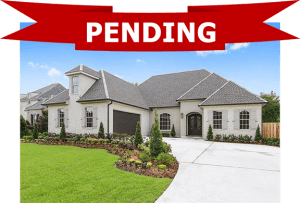
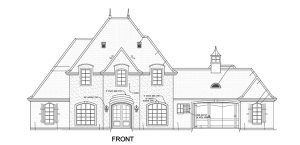
Front elevation of this new construction home located in the Parks of Plaquemines. Custom large home built by a local contractor. Approximately 4 bedrooms and 3 baths with many custom features.Homebuyers are eager to purchase because of the record-low mortgage rates. The month of May brought the largest monthly gain ever recorded, and this month the rise in pending home sales is back up to pre-pandemic levels.

The National Association of Realtors (NAR) publishes The Pending Home Sales Index (PHSI) which is the leading indicator of housing activity. The PHSI measures housing contract activity and is based on signed real estate contracts for existing single-family homes, condos, and co-ops. The PHSI is issued around the 25th of each month.

According to the graph, the PHSI rose to 16.6% from 99.6 in May to 116.1 in June. The sales on a year-over-year basis were 6.3% higher than this time last year. This data is shown with existing-home sales, but the pending home sales index leads the existing-home index by a couple of months.

“It is quite surprising and remarkable that, in the midst of a global pandemic, contract activity for home purchases is higher compared to one year ago,” said Lawrence Yun, NAR’s chief economist. “Consumers are taking advantage of record-low mortgage rates resulting from the Federal Reserve’s maximum liquidity monetary policy.”

As far as the national regions, all four regions had a double-digit gain in month-over-month contract activity. The Northeast saw a 54.4% increase to 95.4, in the Midwest there was a 12.2% rise to 110.9, in the South it jumped 11.9% to an index of 140.3 and in the West, it jumped 11.7% to 99.6.

“The Northeast’s strong bounce back comes after a lengthier lockdown, while the South has consistently outperformed the rest of the country,” Yun said. “These remarkable rebounds speak to exceptionally high buyer demand.”

The housing market is making a strong recovery with record-low mortgage rates. The outlook for the U.S. economy is promising.

Click Here For the Source of the Information.

Builder Confidence Soars in July

Builder confidence has caught back up to the pre-pandemic level as of July. The housing market is in the lead to the U.S. economic recovery. According to the latest NAHB/Wells Fargo Housing Market Index (HMI) newly-built single-family homes rose from 14 points to 72 points in July.

The National Association of Home Builders started the NAHB/Wells Fargo HMI 30 years ago. It is a monthly survey that measures builder perceptions and asks respondents to rate market conditions for the sale of new homes at the present time and in the next six months as well as the traffic of prospective buyers of new homes.  A panel of builders is chosen each month to rate present single-family sales, and single-family sales for the next six months on a scale of good, fair, or poor. They also rate traffic of prospective buyers on a scale of high to very high, average, or low to very low.

The HMI can range between 0 and 100. July has seen good numbers with current sales conditions at an HMI of 79, sales expectations in the next six months rose to 75 points and the measure charting traffic of prospective buyers was at 58.

“Builders are seeing strong traffic and lots of interest in new construction as existing home inventory remains lean,” said NAHB Chairman Chuck Fowke. “Moreover, builders in the Northeast and the Midwest are benefiting from demand that was sidelined during lockdowns in the spring. Low interest rates are also fueling demand, and we expect housing to lead an overall economic recovery.”

“While the housing market is clearly rebounding, challenges exist,” said NAHB Chief Economist Robert Dietz. “Lumber prices are at a two-year high and builders are reporting rising costs for other building materials while lot and skilled labor availability issues persist. Nonetheless, the important story of the changing geography of housing demand is benefiting new construction. New home demand is improving in lower density markets, including small metro areas, rural markets and large metro exurbs, as people seek out larger homes and anticipate more flexibility for telework in the years ahead. Flight to the suburbs is real.”

Click Here For the Source of the Information.