
Housing Market Sees December Surge Despite Economic Challenges

The housing market ended 2024 on a strong note, with single-family construction rising in December despite ongoing economic pressures such as high mortgage rates, elevated financing costs, and a shortage of buildable lots.
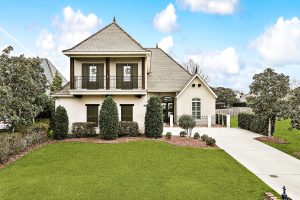
According to a recent report from the U.S. Department of Housing and Urban Development and the U.S. Census Bureau, overall housing starts surged by 15.8% in December, reaching a seasonally adjusted annual rate of 1.50 million units—the highest level since February 2024.

Single-Family and Multifamily Construction Trends

While single-family housing starts increased by 3.3%, reaching a 1.05 million annualized rate, the multifamily sector experienced a much sharper rise. Multifamily starts, which include apartment buildings and condominiums, jumped by 61.5% in December, hitting a 449,000-unit pace.

Despite this late-year boost, total housing starts for 2024 reached 1.36 million, marking a 3.9% decline from 2023’s total of 1.42 million. However, single-family construction showed resilience, with 1.01 million new starts in 2024—up 6.5% from the previous year. The National Association of Home Builders (NAHB) predicts that single-family homebuilding will see modest growth in 2025, driven by ongoing housing shortages and a strong economic backdrop.

In contrast, multifamily starts for 2024 saw a significant 25% drop from the previous year. As of December, there were 1.7 apartments completing construction for every new apartment breaking ground, signaling a slowdown in multifamily expansion. Experts anticipate that multifamily construction will stabilize in late 2025, supported by a low national unemployment rate and improving financial conditions.

Completions and Regional Trends

Single-family home completions in 2024 ended on a positive note, rising 2.2% compared to the previous year. Multifamily completions saw even stronger growth, rising 35% year-over-year, with two- to four-unit buildings (“missing middle” housing) increasing by 42.5%. This surge indicates a growing demand for medium-density housing, which could expand further with zoning reforms.

Regionally, combined single-family and multifamily starts for 2024 varied across the country:

  • Northeast: +9.1%
  • Midwest: -0.1%
  • South: -5.2%
  • West: -7.7%

Permits and Future Outlook

Building permits, which indicate future construction activity, declined by 0.7% in December to an annualized rate of 1.48 million units. Compared to December 2023, permits were down 3.1% overall, though single-family permits saw a slight 1.6% increase to 992,000 units. Multifamily permits dropped 5% to a 491,000-unit pace.

For the full year, total permits in 2024 reached 1.47 million, reflecting a 2.6% decline from 2023. However, single-family permits totaled 981,000—up 6.6% from the previous year, which is a positive indicator for 2025.

The number of single-family homes under construction stood at 641,000 in December, down 5.3% year-over-year. Meanwhile, the number of apartments under construction dropped 21% from the previous year, reaching 790,000 units. The multifamily pipeline peaked in July 2023 at 1.02 million units and has been steadily declining since.

Despite economic headwinds, the housing market showed resilience in December, with single-family home construction continuing its upward trajectory and multifamily completions reaching a high point. While 2024 saw an overall decline in total housing starts and permits, the steady growth in single-family construction and missing middle housing signals optimism for 2025. With ongoing demand and a persistent housing shortage, the market is expected to stabilize in the coming year.

Click Here For the Source of the Information.

New-Home Sales End 2024 on a High Note Despite Affordability Challenges

A limited supply of existing inventory, coupled with strong demand, helped new-home sales finish 2024 on an upward trajectory, even as buyers continued to navigate affordability concerns.

Sales of newly built single-family homes in December increased by 3.6%, reaching a seasonally adjusted annual rate of 698,000. This figure, based on data from the U.S. Department of Housing and Urban Development and the U.S. Census Bureau, represents a 6.7% increase compared to December 2023. Throughout the year, new-home sales totaled 683,000, marking a 2.5% rise over 2023.

Looking ahead to 2025, forecasts suggest a modest gain in new-home sales, supported by stable macroeconomic conditions and a robust labor market. Additionally, builders remain cautiously optimistic about the construction industry, anticipating potential regulatory changes following the 2024 election that could ease constraints and streamline the building process.

New-home sales are recorded at the time of a signed contract or accepted deposit, regardless of construction stage. The December reading of 698,000 units represents the annualized sales rate if this pace were to persist for 12 consecutive months.

Inventory levels for new single-family homes continued their steady rise, reaching 494,000 units in December—a 10% increase from the previous year. This equates to an 8.5-month supply at the current construction pace, ensuring ample options for prospective buyers. Notably, the number of completed, move-in-ready homes rose by 46% year over year, totaling 118,000 units.

The combined inventory for new and existing homes remained constrained, with new-home supply at 8.5 months and the resale market at just 3.1 months. This brought the overall housing market’s supply to a four-month level—the lowest since April 2024. The market has not approached the six-month benchmark, typically indicative of equilibrium between supply and demand, since 2012.

The median sales price for a new home in December was $427,000, reflecting a 2.1% increase from a year earlier. While prices have edged up, builders continue to find ways to offer more affordable options to meet buyer demand.

Regionally, the Midwest experienced the most significant growth in new-home sales, posting a 19% year-over-year increase. The Northeast saw a 1.7% uptick, while the West recorded a 2.6% gain. The South, however, experienced a slight decline of 0.2%, though it remained the largest market for new-home sales.

As 2025 begins, the new-home market remains well-positioned for continued momentum. With inventory levels expanding, demand staying strong, and economic conditions holding steady, buyers are expected to have more opportunities to explore new construction homes in the months ahead.

Click Here For the Source of the Information.

Choosing the Right Lot for Your New Home

Building a home is one of the biggest investments you’ll make, and choosing the right lot is a crucial step in the process. While it may seem like a simple decision, there are many factors to consider to ensure your lot meets your long-term needs and preferences. Here’s a breakdown of key aspects to keep in mind when selecting the perfect lot for your new home.

Researching Available Lots

When building in a new construction neighborhood, start by checking the builder’s website. Many production builders provide online maps showing available, reserved, and sold lots. This can give you a head start on finding a lot that fits your criteria before physically visiting the site.

Lot sizes can vary significantly. In our neighborhood, lots range from 0.3 to 0.7 acres. While a larger yard would have been ideal, purchasing private land for a custom build was beyond our budget. Knowing the trade-offs between space, cost, and location is essential in making an informed decision.

Considering Location and Privacy

Your lot’s location within the neighborhood can impact your daily life. We preferred a lot further from the main entrance to minimize traffic and noise. Additionally, we didn’t want a backyard that directly met another neighbor’s property, as privacy was an important factor. Fortunately, a lake behind our home provides a natural buffer, enhancing both privacy and the view.

If privacy is important to you, consider:

  • Whether the lot backs onto another property or a natural feature (such as a lake or greenbelt)
  • The proximity to busy streets, playgrounds, or common areas
  • The overall traffic flow within the neighborhood

The Importance of Lot Orientation

Sunlight exposure can affect the comfort and efficiency of your home. A north-facing lot was ideal for us because it ensures that the main living spaces (living room, kitchen, dining area) receive plenty of natural light throughout the day. If you spend a lot of time in your backyard in the evening, you may prefer a west-facing lot to provide shade at sunset.

Climate considerations also matter. In snowy regions, driveways and walkways on the north or west sides of a home will take longer to melt, which could require additional maintenance.

Ensuring Home Fit and Compliance

Before selecting a lot, confirm with your builder that your desired home design will fit within the lot’s dimensions and restrictions. In our case, we initially considered a neighboring lot but realized our preferred floor plan with a side-loading garage wouldn’t fit. Knowing these constraints ahead of time saved us from potential disappointment later.

Additionally, some neighborhoods have restrictions to prevent identical homes from being built too close together. For example, in our community, the same elevation cannot be built directly next to or across from another home with the same design. Builders may also require variation in exterior finishes, such as brick or siding color.

Checking Easements and HOA Guidelines

Many lots come with easements, which grant utility companies access to certain sections of the land for infrastructure maintenance. In our case, we have a 25-foot yard with an additional 45-foot easement leading to the lake. Permanent structures cannot be built in the easement, limiting how much of the yard can be used for features like decks or patios.

HOAs may have specific guidelines regarding easement use. Some allow fences within easements, while others do not. Before finalizing your lot selection, contact the HOA to clarify any restrictions that may affect your plans.

Walking the Lot Before Purchase

Online maps and blueprints only tell part of the story. Walking the lot in person gives you a real sense of the space, elevation, and surroundings. We visited our lot multiple times, taking pictures from different angles to better visualize how our home would fit. Keep in mind that elevation changes can affect sightlines and drainage, which could impact landscaping plans in the future.

Reviewing the Lot Survey

Once you choose a lot, you should receive a lot survey from the builder. This document outlines key details such as:

  • Lot lines and measurements
  • Easements and restrictions
  • Topography
  • The proposed placement of your home

Different lot types may be available depending on the neighborhood’s topography:

  • Walkout: Full-size basement windows with a door leading outside
  • Lookout: Full-size basement windows but no direct outdoor access
  • Standard: Small egress windows in the basement

Understanding these differences will help you determine which lot type best suits your needs. Selecting the right lot requires careful consideration of location, privacy, sunlight exposure, and HOA regulations. By researching available options, verifying home compatibility, and walking the lot in person, you can make a well-informed decision that enhances both your lifestyle and investment. Taking the time to plan now will ensure you enjoy your new home for years to come.

Click Here For the Source of the Information.


The Evolution of Home and Garden Trends

Just like fashion, food, and hairstyles, home and garden design trends evolve over time. While some trends inspire nostalgia for the past, few have stirred as much reaction as Pantone’s 2025 Color of the Year—Mocha Mousse.

The Controversy of Mocha Mousse

Pantone describes Mocha Mousse as a “rich, warming brown shade” with “the comforting qualities of coffee and chocolate” and “a touch of glamour.” However, many designers and consumers have likened it to less flattering comparisons. Celebrated New Orleans exterior color consultant and interior designer Louis Aubert dismisses the shade as “bland” and “tired,” predicting it will not gain popularity among New Orleans homeowners, much like Benjamin Moore’s ill-fated “Mellow Yellow” from 2000.

The Crescent City’s Unique Relationship with Color

New Orleans has long embraced bold and vibrant hues in home design, reflecting its Latin heritage. While more subdued color palettes dominated the post-Louisiana Purchase era, recent years have seen a resurgence of bright exterior colors to highlight the city’s historic architectural details.

Aubert notes that the Modern Farmhouse aesthetic continues to dominate new construction, with white exteriors, black accents, and cedar highlights remaining a popular choice. However, he anticipates an increasing use of color in 2025, with homeowners expressing individuality through colorful exteriors or striking accent details like a boldly painted front door.

Shifting Interior Trends

Interior design in 2025 is also seeing a return to nostalgic styles. Jennie Cannon West, principal and founder of Studio West, notes a rising demand for home bars and dedicated dining rooms. She attributes this to post-pandemic shifts, where homeowners have become more invested in entertaining within their homes.

West also observes a growing appreciation for historical design influences, such as the Art Nouveau period (1890-1910), characterized by flowing curves, bright colors, and asymmetrical compositions. Additionally, some homeowners are leaning into the retro aesthetics of the 1970s, incorporating wood-paneled walls, mustard yellow and avocado green accents, and atomic-style light fixtures.

The Future of Work and Home

West predicts that more people will return to office settings in 2025, leading to a transformation in workplace design. Companies are shifting away from rigid office layouts in favor of hospitality-focused environments that encourage collaboration and creativity. She cites the redesign of the New Orleans advertising agency Peter Mayer as an example, where traditional desking has been replaced with open, interactive spaces.

Outdoor Trends in 2025

Outdoor spaces are evolving alongside interiors, with sustainability and multifunctionality leading the way. Gardeners and landscape designers are prioritizing choices that support wildlife, reduce water consumption, and maximize usability.

With climate change concerns on the rise, native plant gardens are gaining traction. Plants such as anise, rudbeckia, Louisiana iris, and French mulberry are becoming go-to options for their beauty and resilience in fluctuating weather conditions.

Marianne Mumford, founder of Landscape Images in Jefferson, emphasizes the importance of integrating native plants with traditional New Orleans flora to create balanced, well-designed gardens. She also highlights the use of garden walls as decorative gallery spaces, blending indoor and outdoor aesthetics seamlessly.

Maximizing Small Outdoor Spaces

As urban living expands, small-space gardening continues to grow in popularity. Vertical gardens, trellises, and climbing plants like star jasmine and Peggy Martin roses are being used to bring greenery to compact areas. The enduring charm of balcony gardens in the French Quarter further demonstrates how vertical gardening can make a significant impact in small spaces.

Looking Forward

As 2025 unfolds, home and garden design trends will continue to reflect evolving lifestyles, cultural shifts, and environmental considerations. Whether through bold color choices, nostalgic interiors, or sustainable gardening practices, homeowners are finding new ways to express their individuality while adapting to the ever-changing world around them.

Click Here For the Source of the Information.

Rising Private Construction Spending in the Housing Market

Private residential construction spending rose by 1.5% in October, as reported by the latest U.S. Census Construction Spending data. Compared to the same month last year, there was a 6.4% increase.

The monthly growth in private construction spending mainly came from higher expenses on residential improvements. Spending on improvements jumped by 2.7% in October and was up by 18.5% from a year earlier.

Spending on single-family homes increased slightly by 0.8% for the month. This uptick follows a five-month decline from April to August and reflects growing builder confidence. Year-over-year, spending on single-family homes was 1.3% higher.

On the other hand, spending on multifamily construction broke a ten-month downward trend, rising by 0.2% in October. Despite this small gain, multifamily construction spending is still 6.8% lower compared to last year.

The NAHB construction spending index illustrates that single-family construction spending has slowed since early 2024 due to high interest rates. Growth in multifamily construction spending has also dwindled since its peak in July 2023. Meanwhile, spending on improvements has picked up since late 2023.

In the nonresidential sector, private construction spending increased by 3.5% year-over-year. This rise was largely driven by higher spending in manufacturing, totaling $32.9 billion, followed by the power category at $6.4 billion.

Click Here For the Source of the Information.