
Housing Market Sees December Surge Despite Economic Challenges

The housing market ended 2024 on a strong note, with single-family construction rising in December despite ongoing economic pressures such as high mortgage rates, elevated financing costs, and a shortage of buildable lots.
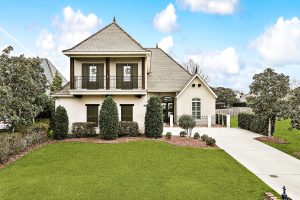
According to a recent report from the U.S. Department of Housing and Urban Development and the U.S. Census Bureau, overall housing starts surged by 15.8% in December, reaching a seasonally adjusted annual rate of 1.50 million units—the highest level since February 2024.

Single-Family and Multifamily Construction Trends

While single-family housing starts increased by 3.3%, reaching a 1.05 million annualized rate, the multifamily sector experienced a much sharper rise. Multifamily starts, which include apartment buildings and condominiums, jumped by 61.5% in December, hitting a 449,000-unit pace.

Despite this late-year boost, total housing starts for 2024 reached 1.36 million, marking a 3.9% decline from 2023’s total of 1.42 million. However, single-family construction showed resilience, with 1.01 million new starts in 2024—up 6.5% from the previous year. The National Association of Home Builders (NAHB) predicts that single-family homebuilding will see modest growth in 2025, driven by ongoing housing shortages and a strong economic backdrop.

In contrast, multifamily starts for 2024 saw a significant 25% drop from the previous year. As of December, there were 1.7 apartments completing construction for every new apartment breaking ground, signaling a slowdown in multifamily expansion. Experts anticipate that multifamily construction will stabilize in late 2025, supported by a low national unemployment rate and improving financial conditions.

Completions and Regional Trends

Single-family home completions in 2024 ended on a positive note, rising 2.2% compared to the previous year. Multifamily completions saw even stronger growth, rising 35% year-over-year, with two- to four-unit buildings (“missing middle” housing) increasing by 42.5%. This surge indicates a growing demand for medium-density housing, which could expand further with zoning reforms.

Regionally, combined single-family and multifamily starts for 2024 varied across the country:

  • Northeast: +9.1%
  • Midwest: -0.1%
  • South: -5.2%
  • West: -7.7%

Permits and Future Outlook

Building permits, which indicate future construction activity, declined by 0.7% in December to an annualized rate of 1.48 million units. Compared to December 2023, permits were down 3.1% overall, though single-family permits saw a slight 1.6% increase to 992,000 units. Multifamily permits dropped 5% to a 491,000-unit pace.

For the full year, total permits in 2024 reached 1.47 million, reflecting a 2.6% decline from 2023. However, single-family permits totaled 981,000—up 6.6% from the previous year, which is a positive indicator for 2025.

The number of single-family homes under construction stood at 641,000 in December, down 5.3% year-over-year. Meanwhile, the number of apartments under construction dropped 21% from the previous year, reaching 790,000 units. The multifamily pipeline peaked in July 2023 at 1.02 million units and has been steadily declining since.

Despite economic headwinds, the housing market showed resilience in December, with single-family home construction continuing its upward trajectory and multifamily completions reaching a high point. While 2024 saw an overall decline in total housing starts and permits, the steady growth in single-family construction and missing middle housing signals optimism for 2025. With ongoing demand and a persistent housing shortage, the market is expected to stabilize in the coming year.


Click Here For the Source of the Information.

New-Home Sales Gain Momentum Heading into 2025

The housing market continues to show strength as new-home sales climbed again in December, reaching a seasonally adjusted annual rate of 698,000. This marks a 3.6% increase from November 2024 and a 6.7% rise from December 2023. With a total of 683,000 new homes sold in 2024—up 2.5% from the previous year—this upward trend signals continued momentum for the market in 2025.

While the median sales price of new homes sold in December increased to $427,000, the overall median price for 2024 stood at $420,100, lower than 2023’s median of $428,600. More affordable inventory is fueling this growth, with 20% of December’s sales occurring in homes priced below $300,000, up from 15% a year ago. Despite persistently high mortgage rates, new-home sales have remained strong.

The Northeast and Midwest experienced the most significant growth in new-home sales, with year-over-year increases of 25.9% and 40.3%, respectively. The South, which continues to lead the nation in total new-home sales, saw a modest annual increase of 0.5%, making up 60.6% of all new-home transactions. Meanwhile, the West bounced back from a slower November, posting a 20.3% month-over-month increase and a 6.9% year-over-year rise.

The supply of new homes for sale at the end of December reached 494,000 on a seasonally adjusted basis. This marks the fifth consecutive month of inventory growth, reflecting a 10% increase from December 2023. New construction homes now represent 30% of all available inventory, maintaining a steady share despite fluctuations throughout the year.

While months of supply dipped slightly from 8.9 to 8.5 due to higher sales activity, the market remains well-stocked and favorable for buyers. With steady inventory and strong completion rates, new-home buyers have more options than ever.

A promising development for homebuyers is the increase in move-in-ready homes. The share of completed homes available for sale remains at 25%, aligning with pre-pandemic levels. Meanwhile, the proportion of homes still under construction has declined to 53.8%. This shift allows buyers to tour and purchase homes that are already finished, reducing uncertainty and wait times.

The latest new-home sales data presents an encouraging landscape for buyers, who can benefit from a well-supplied market, competitive pricing, and more move-in-ready options. Additionally, builders are providing financial incentives, including mortgage rate buy-downs, which can offer relief from elevated borrowing costs.

With more affordable inventory and favorable conditions, now is a great time for homebuyers to explore new construction options. As the market heads into 2025, new-home sales are expected to remain a vital component of the housing sector’s continued growth.

Click Here For the Source of the Information.

The City of Gretna Celebrates Lundi Gras, March 3, 2025

Celebrate Lundi Gras in style at the Gretna Marketplace with Party on the Huey, a family fun event featuring live music and festive entertainment!

Lundi Gras Celebration

March 3, 2025
6pm – 10pm

Free Event.

Click Here For More Information.

HBA Parade of Homes Reception, June 29, 2025

Come see who the winners is in New Orleans.
new-orleans-hba

Greater New Orleans Home Builders Association (HBA)
Parade of Homes  2025


June 29, 2025

Free Event.

Click Here For More Information.

HBA Parade of Homes Reception, June 28, 2025

Come see who the winners is in New Orleans.
new-orleans-hba

Greater New Orleans Home Builders Association (HBA)
Parade of Homes  2025


June 28, 2025

Free Event.

Click Here For More Information.